About Me

Showing posts with label caraway seeds. Show all posts

Thursday, April 12, 2012

Rye Sour cream Chia Bread

The chia seed and delayed fermentation experiments continue.
This was a two loaf attempt, as one of the loaves was the April bread for my father-in-law.

Ingredients:
For two loaves
560 g whole wheat flour
200 g rye flour
100 g bread flour
2 tsp salt (12 g)
scant 1½ Tbsp instant yeast (4 g)
scant ½ Tbsp caraway seeds (because that's all I had)

1½ cup warm water (microwaved for 45 seconds)
½ cup sour cream (53 g)
2 Tbsp molasses (33 g)
½ Tbsp chia seeds

½ cup water added during mixing and kneading

The process was similar to the previous bread, except I mixed in all the ingredients at the same time.

Day 1

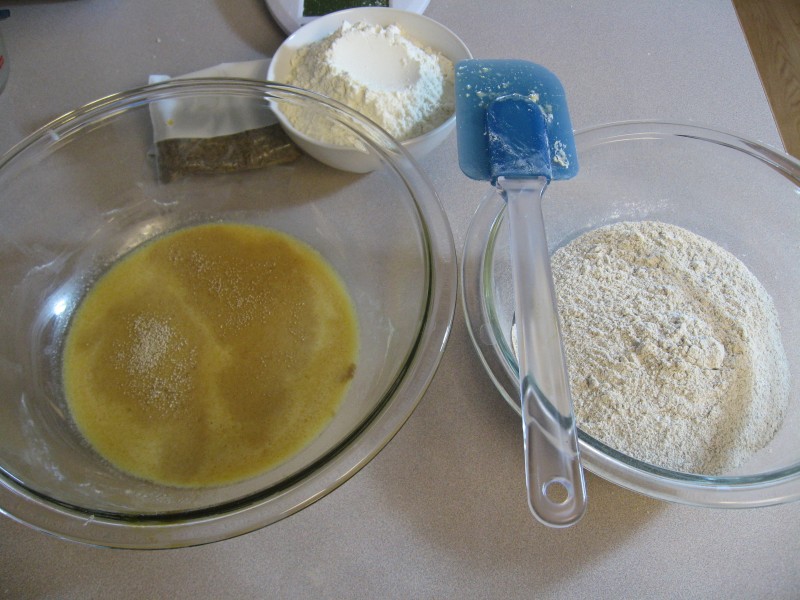
Ingredients

9:23 pm: Dry ingredients and wet ingredients ready for mixing

9:31 pm: Ingredients kneaded in. Ready for 10 minute rest

9:48: Rested and then kneaded well for 8-10 minutes

9:49 pm: Ready for first rise

10:50 pm: Risen after an hour or so, then placed in the refrigerator

Day 2

3:02 pm: Out of the refrigerator

6:46 pm: Split into two loaves

6:58 pm: Rested and then shaped. Ready for proofing

7:57 pm: Proofed, slashed and ready for the oven

Baked!

Crust and crumb

Date: March 30-31, 2012
Recipe: My own recipe
Flours: Whole wheat flour, bread flour, rye flour
Bread specific ingredients: Chia seeds, sour cream, caraway seeds
Sweetener used: Molasses
Liquid: Water

Comments: The first rise was not complete when the dough was refrigerated. I need to read up more or figure out when the best time to refrigerate the dough is. On day 2, after the dough came close to room temperature, I directly shaped and proofed it. No rise is needed on the second day as the overnight fermentation is the second rise.
There wasn't much oven spring, but I liked how the boule stayed rounded rather than flattening as usually happens with my boules. I see the usefulness of a bannetone, although I wonder how a well hydrated loaf proofed in a bannetone wouldn't flatten during baking.
The bread tasted good, keep moist (thanks chia seeds) and overall was considered a success.

Monday, March 5, 2012

Rye Buttermilk Bread

Back to the basics.  A simple rye-wheat dough with rye's favorite accompaniments:  buttermilk,  caraway seeds and molasses.

Ingredients:
For one round loaf
130 g rye flour (~1 cup)
348 g buttermilk (1½ cup)
¼ tsp instant yeast
Mix the above 3 ingredients together.  It forms a thick batter.  Soak for an hour or so (This is not necessary for bread,  but I had the time and followed the 'starter' concept,  giving the rye flour extra time to soak and develop flavor)

60 g bread flour (scant ½ cup)
250 g whole wheat flour (1¾ cup)
¾ tsp instant yeast
1 tsp salt
1 Tbsp vegetable oil
1 Tbsp molasses
1 tsp caraway seeds

Ingredient (with soaked rye-buttermilk paste)

Mix together flours,  salt,  yeast and caraway seeds well.  Add in oil and molasses.  Stir in the rye-buttermilk mixture and mix everything well.  Let rest for 5 minutes and then knead for 5-8 minutes.  When kneading dampen hands with water to minimize the dough sticking to hands.

10:05 am: Kneaded and ready for first rise

1:03 pm: First rise is done after a long time

1:05 pm: Deflated, rounded and ready for second rise

2:25 pm: Second rise is done

2:28 pm: Rounded in a boule shape and ready for proofing

3:10 pm: Slashed and placed in pre-heated cast iron combo cooker

4:07: Unusual oven spring?

I thought this angle was pretty

Sliced well with decent uniform crumb

Notes:
Date: February 21, 2012
Recipe: My own recipe
Flours: Whole wheat flour, rye flour, bread flour
Bread specific ingredients: caraway seeds
Sweetener used: Molasses
Liquid: Buttermilk

Comments: Nothing special in the making of this bread.  I've baked rye-buttermilk breads in the past,  just that this time I used my own proportions for the flours.  Not sure that the hour long pre-soak made much difference in the end result.  If anything I think letting the first rise take its time,  even though it was about three hours,  was the key.  I've started giving the first rise more time than I used to,  partly because the house is cooler these days and partly because it appears to help the rest of the baking process.  The bread tasted good,  sliced well and kept well.

Saturday, January 21, 2012

Tassajara Style Rye Bread

For the first loaf of 2012, I wanted to do something different: try a new technique. I had found this little book called The Tassajara Bread Book in the used book store for $3. This book was published in 1970 and almost all the recipes are whole grain! But I had two ingredients I wanted to use: whole milk and rye flour. The book has one recipe that uses whole milk but only whole wheat flour. I modified it to use a mix of rye, whole wheat and some bread flour.

I made two loaves, one of which would be the January bread for my father-in-law (He was quite happy to receive another 'A Loaf Every Month' IOU from us for Christmas.)

Ingredients for two loaves:
Sponge:
250 g rye flour
200 g whole wheat flour
2 tsp instant yeast
2 Tbsp oil
2 Tbsp molasses
1 cup whole milk
1½ cup 1% milk   (2½ cup milk total. Combine milks and scald. Cool to 100° F)

Final dough:
250 g whole wheat flour
100 g bread flour
2 tsp salt
2 tsp caraway

Tassajara technique explained with pictures:

The sponge contains most ingredients except the salt and half the flour.

12:42 pm: Sponge ingredients

When mixed, the consistency is like pasty batter. The 'batter' is stirred well with a wooden spoon (stir 100 times).

12:50 pm: 'Batter' after stirring well.. 100 times

It is covered and left to rise in a warm place for 50 - 60 minutes.

2:02 pm: Unexpected rise that stuck to the lid

Final dough ingredients are added in. I mixed the salt with the flour first. Flour is 'folded in' little by little until dough comes away from sides of the bowl.

2:02 pm: Final dough ingredients

2:16 pm: Adding in the flour

2:23 pm: Before kneading

I let the dough rest for 5 minutes.
The dough is kneaded on a floured surface, using more flour as needed to keep the dough from sticking to the work surface, about 10-15 minutes until dough is smooth.

2:38 pm: Post kneading

The dough is left to rise for an hour or so.

3:57 pm: After the first rise

The dough is deflated, rounded and let rise again.

3:59 pm: Ready for the second rise

4:51 pm: Risen for a second time

The dough is shaped into loaves.

4:57 pm: Shaped into loaves, sprinkled with sesame seeds

5:42 pm: Risen loaves

The loaves are baked in a 350°F oven for an hour

6:49 pm: Not a lot of oven spring

Sliced well

Decent crumb

Notes
Date: January 7, 2012
Recipe: Adapted from #17 Tassajara Yeasted Bread Using Whole Milk from The Tassajara Bread Book by Edward Espe Brown
Flours: Whole wheat flour, rye flour, bread flour
Bread specific ingredients: caraway seeds
Sweetener used: Molasses
Liquid: Whole milk, 1% milk

Comments: The dough didn't rise as much as I had hoped for, based on the rise of the sponge. Salt inhibits rising, that is why it is added later, letting the yeast develop well in the sponge stage. I should try a Tassajara recipe without modifications to know if the technique yields better tasting loaves than Laurel Robertson's technique (similar, but without the sponge). The sponge method does add an extra hour or so to the bread making process.
This bread was good, but nothing special. It sliced very well, that's always a big plus.

Saturday, October 8, 2011

Potato Rye Bread

I must have missed this bread in Laurel Robertson's 'The Laurel's Kitchen Bread Book' because it's in the Sprouts section and not in the Rye Breads section. It uses yogurt and fennel seeds along with wheat flour and of course, potatoes and rye. However I had buttermilk I wanted to use, RH doesn't like fennel and I didn't have quite enough rye. So the final recipe is somewhat different from the original.

Recipe

110 g cooked potato
114 g buttermilk
150 g rye flour
340 g whole wheat flour
1 tsp salt
1 tsp instant yeast
1 tsp caraway seeds
1 Tbsp oil
2/3 cup water

Ingredients

I blended the potatoes with a hand blender so they would mix uniformly in the dough. Not a good idea, because the blender makes the potatoes very gummy. Hand mashing would be best.
The mashed potatoes, buttermilk, yogurt and 1/3 cup water are mixed together. In a large bowl the remaining dry ingredients are whisked together.
When first mixed in, the dough should be very stiff. As the dough is kneaded the moisture from the potatoes gets incorporated. The remaining 1/3 cup water is slowly added in over the 10 minute kneading.

11:17 am: Ready for the first rise

1:12 pm: First rise is done nearly two hours later

1:14 pm: Ready for second rise

1:51 pm: Quicker second rise

2:04 pm: After rounding, resting and shaping

2:22 pm: Super fast proofing

2:23 pm : Into the pre-heated cast-iron pan

3:26 pm: Is that oven spring?

This was the first time I used a vertical slash on a round loaf. Whoa!

Slicing very wide loaves is not easy

Decent crumb

The bread
We shared some of the bread with the in-laws. We liked the taste, mildly rye and caraway seed - like.

Notes
Date: Sept 24, 2011
Recipe: Adapted from Potato Rye Bread from Laurel Robertson's book, 'The Laurel's Kitchen Bread Book'

Flours: Whole wheat, rye
Bread specific ingredients: Potato
Sweetener used: None
Liquid: Buttermilk, water

Comments: I need to blog promptly so I can write useful notes about the baking experience. I think I said that a few blog posts ago too. Sigh.

-RPH

Wednesday, September 21, 2011

Polish Buttermilk Rye

I was looking for something that used buttermilk that wasn't from PR or LR books. I found a recipe called Polish Buttermilk Rye here and thought it was interesting, even though instructions were for machine mixing and it used bread flour.

As the detailed instructions are available on the original webpage, here is my attempt in pictures. I made only one loaf worth, ie. half the recipe. I didn't end up using all the bread flour, in hindsight I probably should have. Compared to the pretty pictures in the original recipe, my loaf looked quite different.

Ingredients

Wet ingredients ready to mix into the rye flour

1:12 pm: Ready for the rye 'paste' to rise

2:59 pm: After nearly two hours, the dough had flattened,
but hadn't risen a whole lot

3:22: Bread flour and caraway seeds mixed in and kneaded

3:52: Decently risen

3:54 pm: Shaped, but didn't manage a smooth surface

4:14 pm: Proofed and ready for the oven

5:04 pm: Not a lot of oven spring

Dull crust but sliced decently

Tight crumb at the bottom

The bread
The bread didn't slice very thin, but it tasted good. We had it with soup and soy slice - roasted red pepper sandwiches.

Notes
Date: Sept 3, 2011
Recipe: Polish Buttermilk Rye from this website.

Flours: Rye flour, bread flour
Bread specific ingredients: Caraway seeds
Sweetener used: Molasses and sugar
Liquid: Buttermilk

Comments: The recipe lists ¼ C water (for two loaves) in the ingredient list but doesn't mention it's use later. I skipped the egg wash which would explain the dull crust. Should have used all the bread flour which would have helped stiffen the dough and get a smooth surface during shaping.

-RPH